
Style · Japandi
Japandi Interior Design
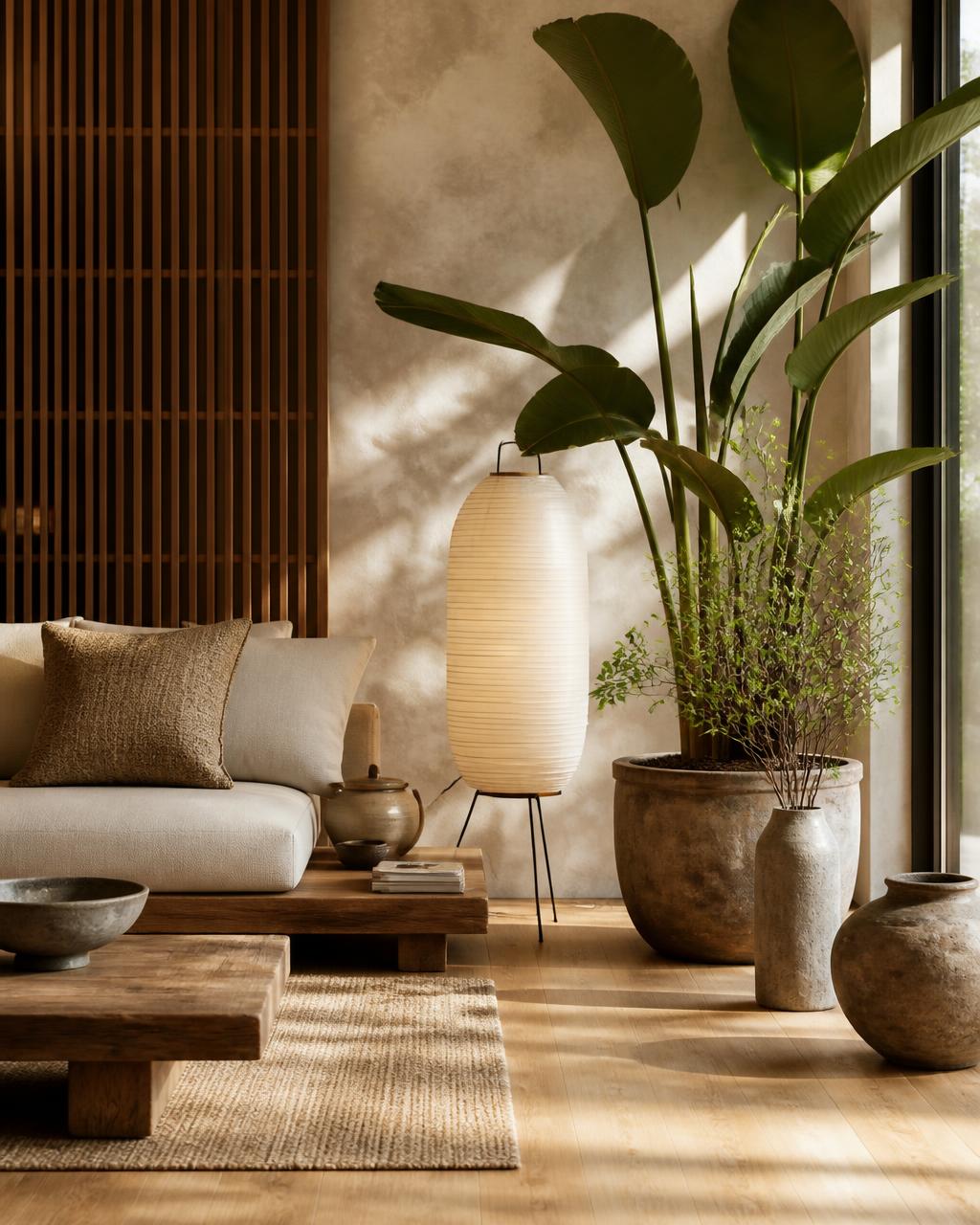
Japandi is what happens when Japanese restraint and Scandinavian warmth agree on the same room: simple forms, natural material, generous negative space, and nothing present that has not earned its place.
The principles we design to
Proportion before decoration. Low horizontal lines, generous floor left visible, and furniture whose silhouette is legible from across the room. Colour stays within a narrow band of cream, sand, oatmeal, pale timber and one grounding charcoal or clay.
Materials do the emotional work: oak and ash, lime plaster, paper, linen, wool, unglazed stoneware, a little blackened steel. Texture is what keeps a neutral room from reading as cold — a flat cream wall next to a woven rug next to a raw oak edge.
- Neutral palette, four to five tones
- Light timber with visible grain; no high-gloss finishes
- Low-slung furniture and clear horizontal lines
- Negative space treated as a material
- Concealed, full-height storage
- Warm diffused light — paper, linen, indirect sources
Japandi bedrooms and bathrooms
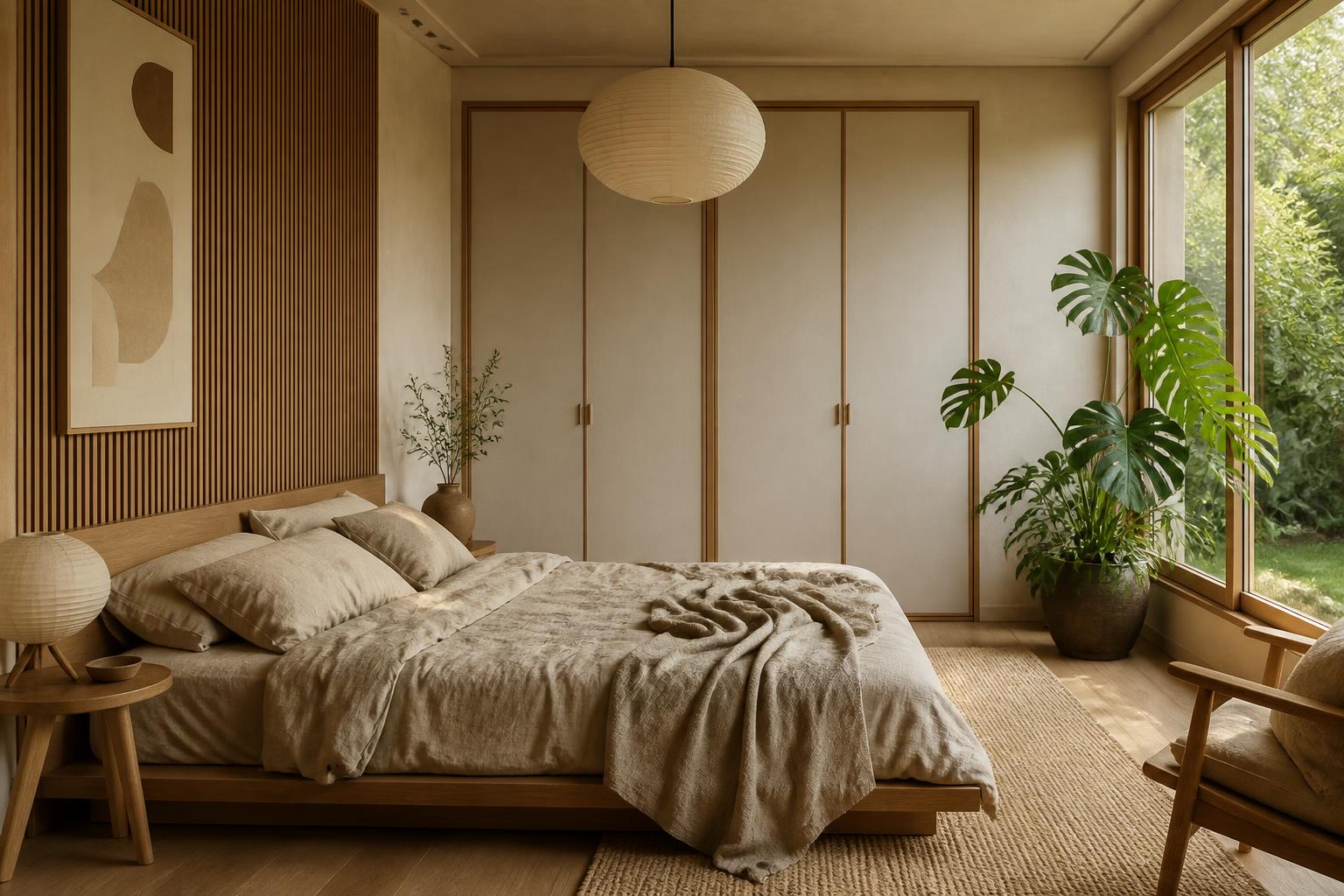
Bedrooms are where Japandi is most useful. A low platform bed, flush wardrobes, sand linen, one paper pendant, one warm sconce — the room stops asking anything of you.
Bathrooms follow the same logic with warm stone, timber and side lighting instead of high-gloss tile and downlights.
Keeping it warm rather than austere
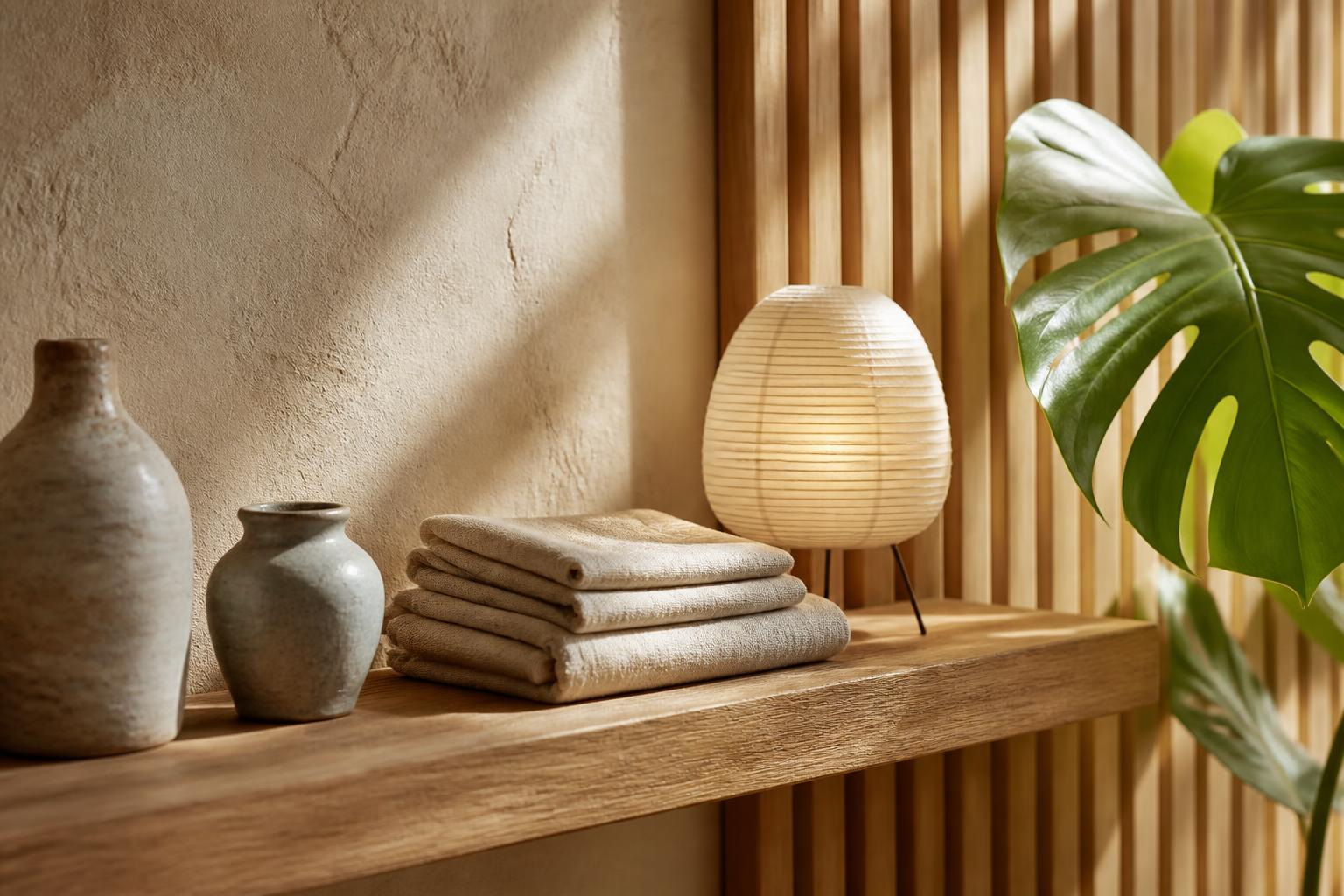
The failure mode of Japandi is a beige showroom. We avoid it with irregular handmade objects, textiles with real weight, plants in genuine quantity, and at least one piece with visible age or repair. Craft and imperfection are the point, not the exception.
Questions we are asked
- What is the difference between Japandi and Japanese interior design?
- Japandi is a hybrid: Japanese spatial restraint combined with Scandinavian softness, pale wood and domestic comfort. Japanese-inspired interiors draw more directly from Japanese architecture itself — the module of the room, thresholds, screens, joinery and the relationship to a garden or to daylight. We treat them as distinct approaches.
- Does Japandi suit families?
- It suits them well, provided the storage is designed properly. Japandi depends on surfaces staying clear, which means the joinery has to absorb real life.
Begin
Looking for calm rather than statement?
Japandi is our most requested direction. Tell us about the room.